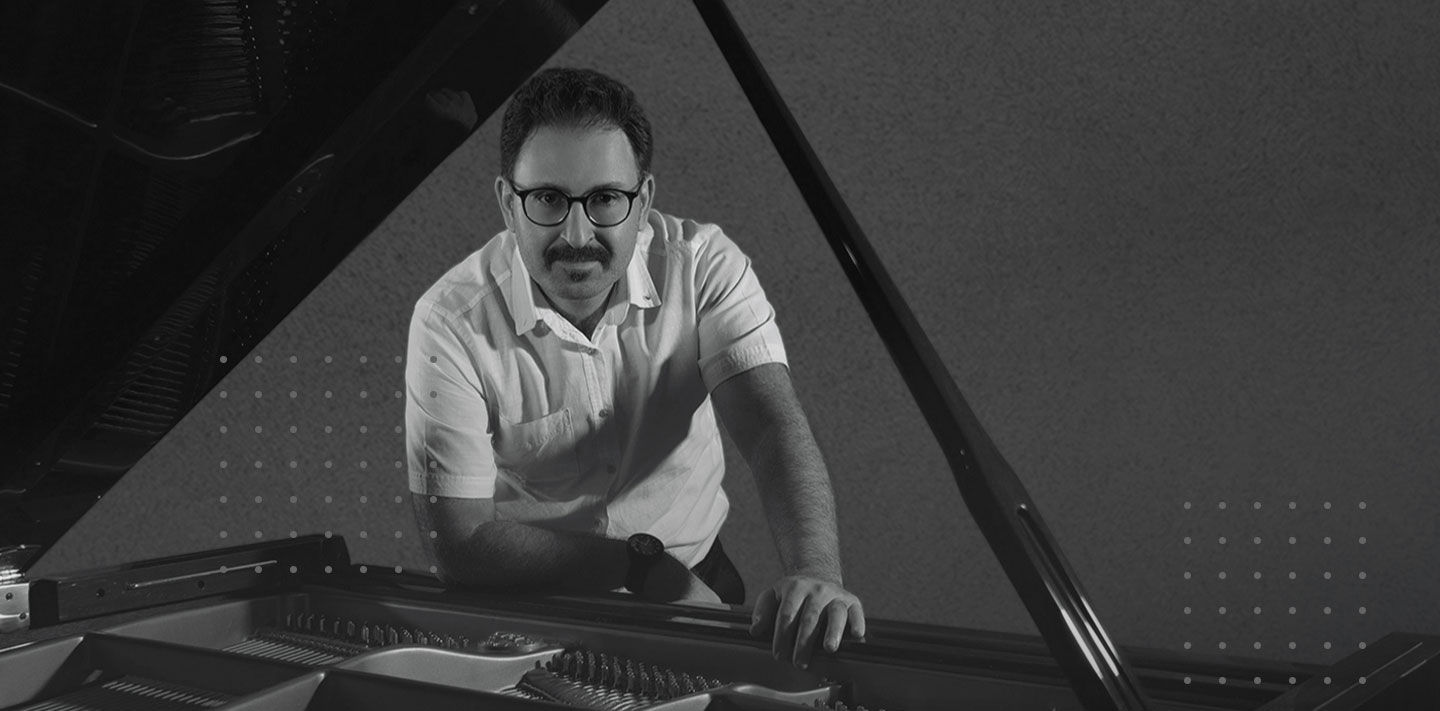
Biography of Hami Keivan
Hami Keivan is an Iranian pianist and composer acclaimed for his distinctive contributions to the jazz fusion genre. His work is defined by a seamless integration of Iranian traditional music, jazz, and contemporary classical elements, forming a unique and innovative musical voice.
Born on May 7, 1987, in Isfahan, Iran, Keivan was raised in a musically rich environment. He began his formal musical training at the age of six, studying tombak (the Iranian hand drum) under the tutelage of his father, a professional percussionist. By the age of fifteen, he had already garnered national attention by winning first place at the prestigious Young Music Festival in Isfahan.
While percussion laid the foundation for his early musical journey, Keivan’s evolving passion for melody and composition led him to explore the piano at the age of sixteen. Recalling a formative childhood experience, he notes: “When I was eight, I watched a Yanni concert on black-and-white television and felt that the piano was another planet in my musical life.”
Keivan completed his secondary education at a specialized music high school in Isfahan, and later pursued advanced musical studies at the Tehran Conservatory of Music. There, he studied classical composition and piano under esteemed instructors Marina Aghabakian, Alex Havansian, and Mohammad Pazhutan. During this period, he also immersed himself in contemporary compositional techniques, including the methods of David Cope, as well as electronic music production.
In 2013, Keivan released his debut album The Colors, a genre-blending project that combined Iranian instrumentation with electronic textures. This was followed by Minimal for Noise and Piano (2014) and Music for Themes (2017), a collection of solo piano pieces inspired by Iranian musical motifs. His works “Red” and “Black” from The Colors were later recognized at the FAJR Music Festival in Tehran.
In 2019, Keivan earned a Master’s degree in Contemporary Performance and Production from Ber Hami Keivan is an Iranian pianist and composer acclaimed for his distinctive contributions to the jazz fusion genre. His work is defined by a seamless integration of Iranian traditional music, jazz, and contemporary classical elements, forming a unique and innovative musical voice.
Born on May 7, 1987, in Isfahan, Iran, Keivan was raised in a musically rich environment. He began his formal musical training at the age of six, studying tombak (the Iranian hand drum) under the tutelage of his father, a professional percussionist. By the age of fifteen, he had already garnered national attention by winning first place at the prestigious Young Music Festival in Isfahan.
While percussion laid the foundation for his early musical journey, Keivan’s evolving passion for melody and composition led him to explore the piano at the age of sixteen. Recalling a formative childhood experience, he notes: “When I was eight, I watched a Yanni concert on black-and-white television and felt that the piano was another planet in my musical life.”
Keivan completed his secondary education at a specialized music high school in Isfahan, and later pursued advanced musical studies at the Tehran Conservatory of Music. There, he studied classical composition and piano under esteemed instructors Marina Aghabakian, Alex Havansian, and Mohammad Pazhutan. During this period, he also immersed himself in contemporary compositional techniques, including the methods of David Cope, as well as electronic music production.
In 2013, Keivan released his debut album The Colors, a genre-blending project that combined Iranian instrumentation with electronic textures. This was followed by Minimal for Noise and Piano (2014) and Music for Themes (2017), a collection of solo piano pieces inspired by Iranian musical motifs. His works “Red” and “Black” from The Colors were later recognized at the FAJR Music Festival in Tehran.
In 2019, Keivan earned a Master’s degree in Contemporary Performance and Production from Berklee College of Music’s Valencia Campus in Spain. During his time at Berklee, he studied under internationally renowned artists including Polo Ortí, Gary Willis, and Perico Sambeat—mentors who deeply shaped his artistic development. “They challenged me in ways that opened entirely new perspectives in both performance and composition,” Keivan reflects.
Following his graduation, Keivan collaborated with a number of world-class musicians, including legendary drummer Dave Weckl, acclaimed bassist John Patitucci, and Turkish drummer Volkan Öktem. These collaborations have been instrumental in refining his fusion-oriented approach and elevating his international presence. His artistic partnerships extend beyond these names, as he continues to work with a diverse array of international artists across genres and disciplines.
Keivan’s most recent album, Melancholy Smile (2022), demonstrates his matured compositional sensibility, characterized by emotive depth, improvisational richness, jazz-influenced harmony, and Eastern melodic structures. His compositions have received international recognition, including honors from the InterContinental Music Awards in Los Angeles for Darne Jan and Some Days, both noted for their originality and expressive power.
In addition to his work as a performer and composer, Keivan is an experienced educator dedicated to the next generation of musicians. Since 2007, he has taught piano and composition at institutions such as Baste Negar, Maktoob Nokhost, and the Hezar Dastan Music School in Iran.
With a commitment to artistic innovation and a deep respect for his cultural roots, Hami Keivan continues to shape a compelling and authentic voice in the global contemporary music landscape.